Due to strong interest, this is an Invite Only event hosted by General Air Products. To inquire about attending in 2025, email Dave Fremont or contact your local General Air Products Sales Manager.
Due to strong interest, this is an Invite Only event hosted by General Air Products. To inquire about attending, email Dave Fremont or contact your local General Air Products Sales Manager.
Due to strong interest, this is an Invite Only event hosted by General Air Products. To inquire about attending, email Dave Fremont or contact your local General Air Products Sales Manager.
No items found.
This one-day class will feature presentations & training from two knowledgeable Fire Sprinkler Industry manufacturers and offers 4 NICET CPD credits.
2025 Training and Event Request Form
Thank you! Your submission has been received!
Oops! Something went wrong while submitting the form.
*NOTE: This is an IN-PERSON Training Event in Atlanta, GA.
Field Technicians Fire Protection / Design Engineers Authorities Having Jurisdiction Insurance Providers Service Managers Installation Managers Project Managers Facility Managers Service Technicians Installation Technician Inspectors
Air Venting & NFPA 13 Code Requirements, Freeze Protection and Corrosion Detection
Learn where air vents are required, how many are necessary and why they are needed. Also how to prevent freeze up in systems, as well as corrosion monitoring.
Air Venting & NFPA 13 Code Requirements, Freeze Protection and Corrosion Detection
Learn where air vents are required, how many are necessary and why they are needed. Also how to prevent freeze up in systems, as well as corrosion monitoring.
New Corrosion Prevention Technology For Dry and Pre-action Fire Sprinkler Systems
Introducing the Vapor Pipe Shield Corrosion Inhibitor Delivery System for Dry & Pre-Action Fire Sprinkler Systems. Providing a deep-dive into Vapor Corrosion Inhibitor technology, its efficacy & safety, and how the c-UL Listed Vapor Pipe Shield delivery method allows for their use in Dry & Pre-Action Fire Sprinkler Systems.
Air Supply Decisions in Cold Storage Fire Sprinkler Systems
Selecting an air supply for cold storage fire sprinkler systems is not only a matter of compliance, but of understanding how moisture, airflow, and leakage interact over the life of the system in these unique environments. This presentation compares the performance characteristics of compressed air, dry air, and nitrogen in freezer applications, with specific focus on ice plug risk, flow capacity, maintenance considerations, and NFPA sizing requirements. Through practical examples and application-specific analysis, attendees will learn how different technologies respond as these systems age and present challenges in the field.
Vapor Corrosion Inhibitors vs. 98% Purity Nitrogen
Exploring the latest findings on corrosion mitigation in dry and pre-action fire sprinkler systems, this presentation dives into recent testing data, including a head-to-head comparison of Vapor Corrosion Inhibitors (VCIs) and 98% purity nitrogen. Attendees will gain insights into the efficacy of these technologies, upfront and long-term cost comparisons, and best practices for installation and maintenance procedures. This session provides essential knowledge for fire protection professionals looking to optimize system performance and extend the longevity of their or their customers' dry & pre-action sprinkler systems.
This session highlights key updates in the 2025 edition of NFPA 13, including new Listing requirements for Fire Protection Air Compressors and the adoption of Vapor Corrosion Inhibitor (VCI) technology, which now allows a Hazen-Williams C-Factor of 120 for new systems. It will also cover the new UL 1450, Supplement SC . Additionally, we’ll review the 2024 NFPA 14 requirement mandating supervisory air for all dry standpipe systems. Attendees will gain a comprehensive understanding of how these updates impact design, installation, and compliance for fire protection air supplies.
(1 NICET CPDs)
Course #1
Fire Sprinkler Air Supplies: Selection, Sizing, Compliance, and Performance
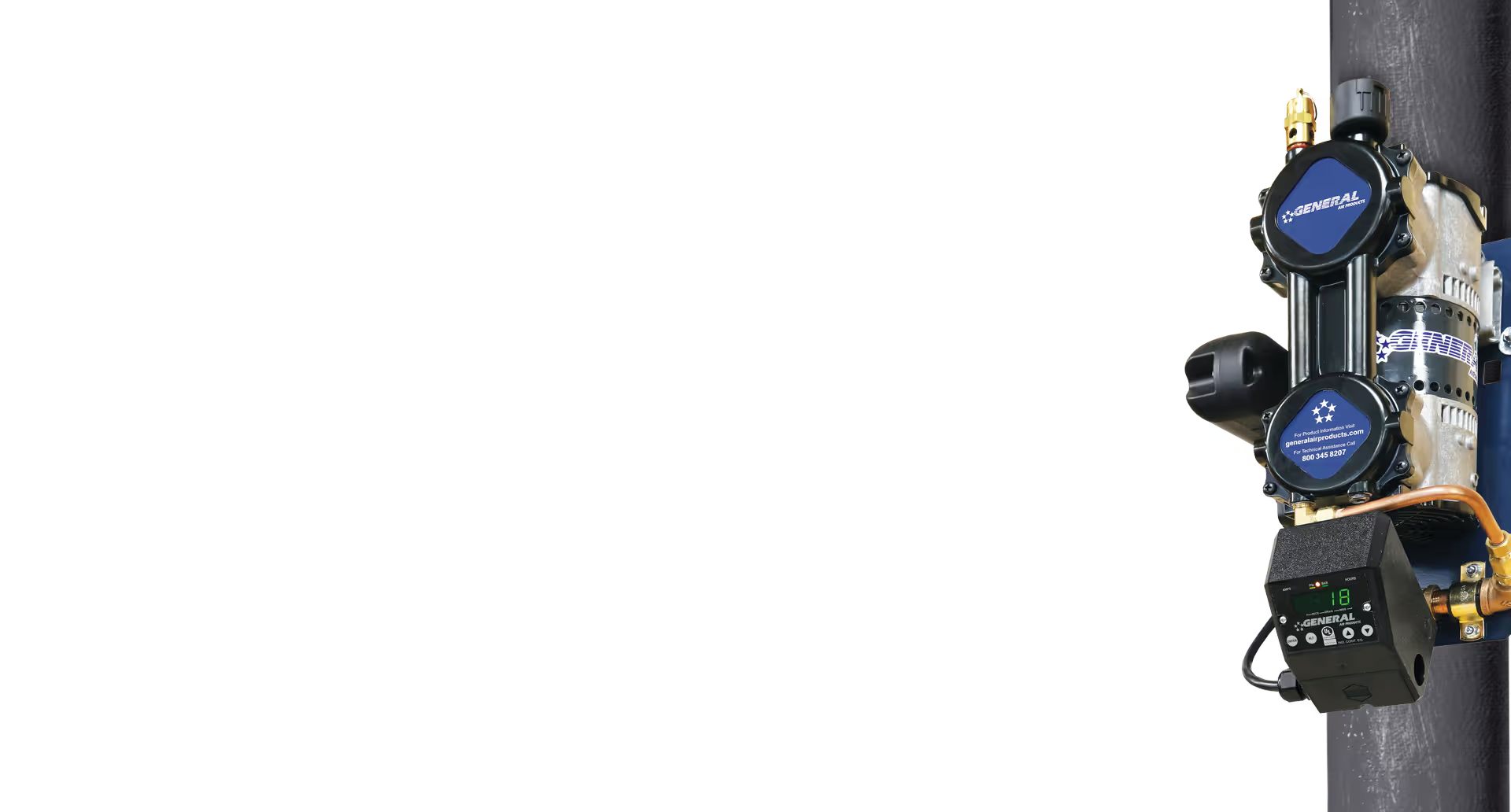
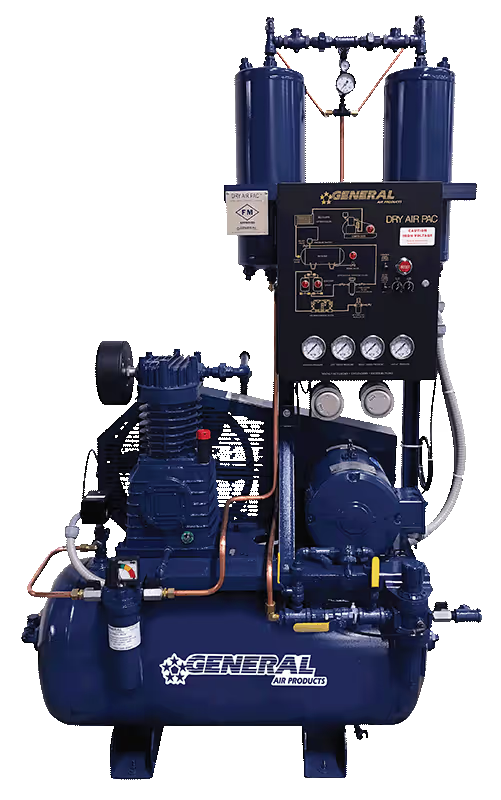
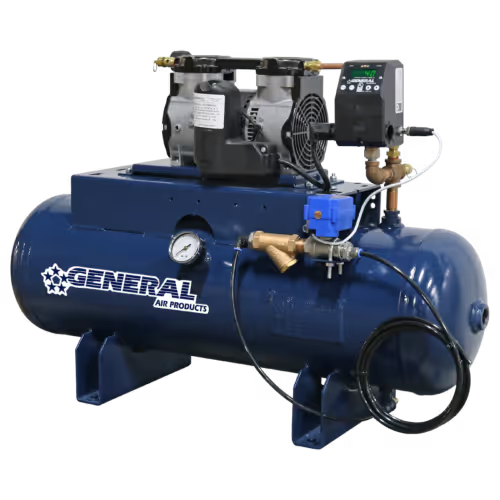
Selecting an air supply for a dry pipe or pre-action sprinkler system involves more than matching pipe volume to a compressor. System fill times, available CFM, leak rates, and code requirements all play a critical role in ensuring reliable operation and compliance.
In this technical webinar, we'll walk through the fundamentals of properly sizing air supplies for dry and pre-action systems using pipe lengths, pipe diameters, and system volume calculations. We'll discuss how compressor performance translates to NFPA fill requirements, review the relationship between CFM output and the 30-minute fill criteria established through UL 1450 Supplement SC, and examine common sizing mistakes encountered in the field.
Attendees will also receive an introduction to General Air Products' new Build Your Air Supply Tool, designed to simplify air supply selection and system calculations. The session will conclude with a review of recent updates to NFPA 13 and NFPA 25 that impact fire protection air supply equipment, inspection, testing, and maintenance requirements.
Vapor Corrosion Inhibitors & Comparison to 98% Purity Nitrogen
Exploring the latest findings on corrosion mitigation in dry and pre-action fire sprinkler systems, this presentation dives into recent testing data, including a head-to-head comparison of Vapor Corrosion Inhibitors (VCIs) and 98% purity nitrogen. Attendees will gain insights into the efficacy of these technologies, upfront and long-term cost comparisons, and best practices for installation and maintenance procedures. This session provides essential knowledge for fire protection professionals looking to optimize system performance and extend the longevity of their or their customers' dry & pre-action sprinkler systems.
(1 NICET CPDs)
Course #2
Webinar Dates Available:
Thursday, August 13th
1:00 PM–2:00 PM EST
1 NICET CPD
COMPLETED
Tuesday, August 25th
12:00 PM–1:00 PM EST
1 NICET CPD
COMPLETED
Wednesday, September 2nd
2:00 PM–3:00 PM EST
1 NICET CPD
COMPLETED
Thursday, September 10th
11:00 AM–12:00 PM EST
1 NICET CPD
COMPLETED
Course #3
Your Dry System is Talking to You: Turning System Data into Action
Dry and pre-action sprinkler systems are constantly providing information about their condition through pressure changes, compressor cycling, leak rates, and other system behavior. The challenge is knowing how to interpret that information and use it to make better service and maintenance decisions.
This presentation explores how new diagnostic capabilities can provide greater insight into dry system performance, helping identify developing issues, guide proactive maintenance, and support long-term system stability.
We’ll look at how system data can strengthen ITM programs and give both contractors and facility teams a clearer picture of system health over time.
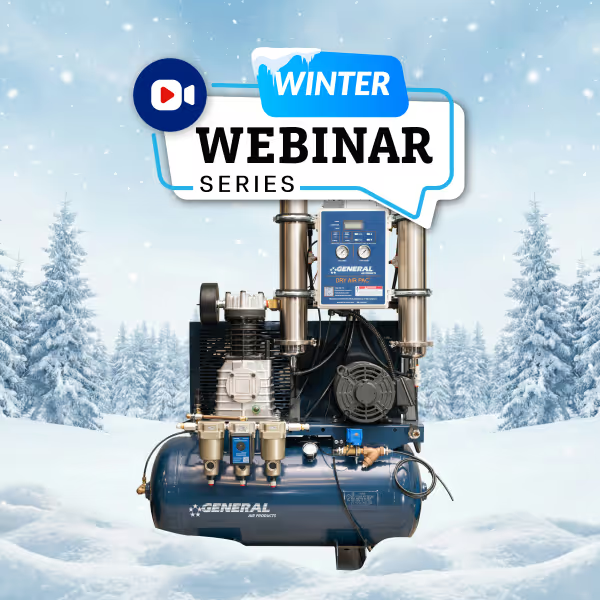
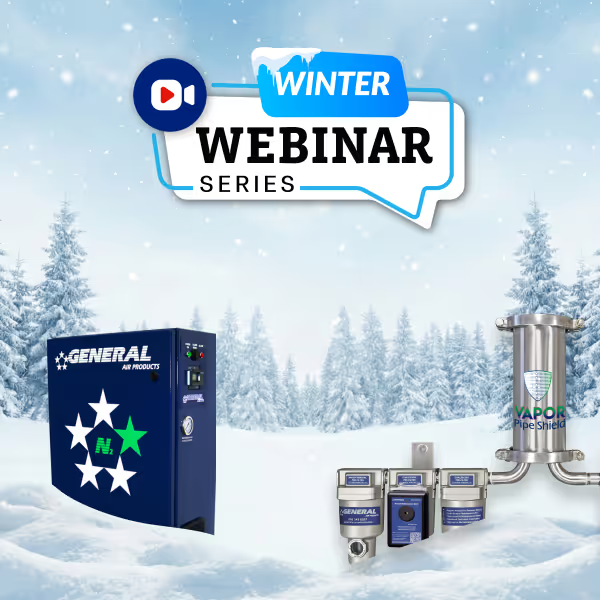
General Air Products Spring Webinar Series – Choosing the Right Air Supply for Your Dry or Pre-action System and Corrosion Mitigation Technology for Dry & Pre-Action Fire Sprinkler Systems








.png)




.avif)


-White.avif)


%20(1).avif)












%20(1).avif)
%20(1).avif)










.avif)


.avif)